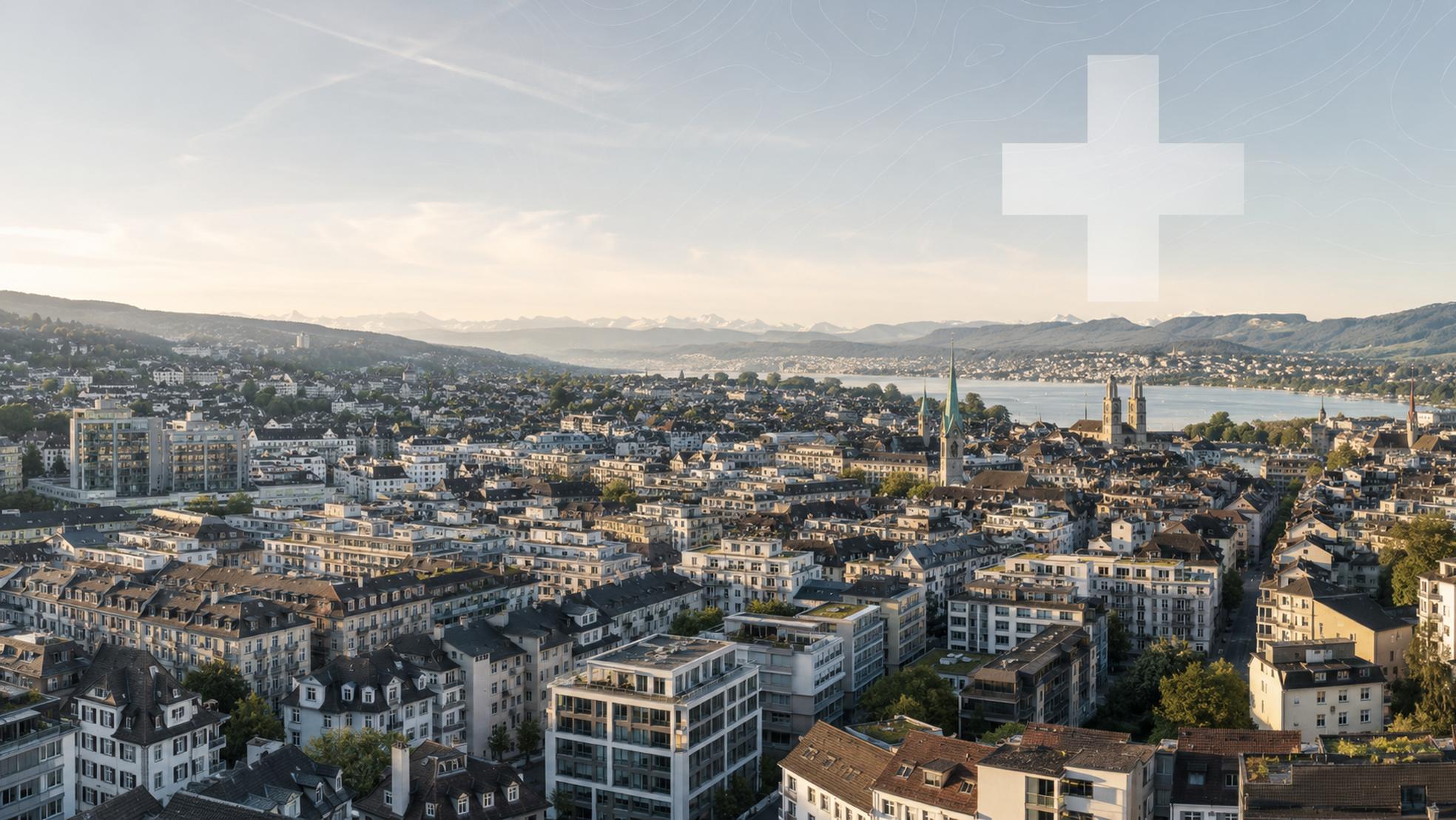
For decades Switzerland has been one of the countries with the highest quality of life in the world.
Security, stability, well-functioning infrastructure, high-quality education, well-maintained towns and villages, easy access to nature, and strong social cohesion shape life in Switzerland.
This is not something that can be taken for granted, nor is it guaranteed in the future.
These qualities are the result of cultural and communal foresight, shared responsibility, and moderation.
Precisely for this reason, the debate surrounding the popular initiative “No to a Switzerland with 10 million! (Sustainability Initiative) deserves a calm and honest discussion.
An Opportunity for Sustainable Housing
Anyone working in the real estate sector experiences the effects of population growth not as an abstract concept, but on a daily basis: increasing pressure on housing, growing urban density, diminishing availability of land, overstretched infrastructure, and an increasingly difficult balancing of social interests.
The crucial question is therefore how much growth can a small country like Switzerland sustainably accommodate before the pressure on housing significantly reduces our quality of life.
Limited Supply and Rising Demand
Switzerland currently has around 9.1 million inhabitants. Since the introduction of the free movement of persons in the early 2000s, the population has grown by approximately 1.7 million people, largely driven by immigration.
At the same time, habitable land remains limited. Mountains, lakes, agricultural areas, and protected spaces create natural boundaries. The initiative calls for the permanent resident population not to exceed ten million people before 2050. Once the population reaches 9.5 million, political countermeasures would already be introduced.
Anyone spending time in urban areas can already feel the consequences of limited living space. Housing is becoming more expensive, families are moving to outlying regions, commuter traffic is increasing, and green spaces are coming under pressure. At the same time, the national vacancy rate for housing continues to decline.
Openness Does Not Mean Limitless
When we look beyond our borders, we can see in other countries how a future without immigration limits can place enormous pressure on residents' quality of life.
The absence of borders does not necessarily mean openness. Rather, having no limits is irresponsible and short-sighted with regard to Switzerland's future.
For us, openness means acting sustainably in a way that allows Switzerland to continue providing current and future generations with housing, a high quality of life, security, and a well-functioning economic and political system.
Economic growth is important, but it is not linearly tied to population growth.
Looking back through history shows how technological innovation and support for entrepreneurship have enabled Switzerland to achieve one of the highest GDPs per capita in the world. At the same time, this progress means that companies increasingly depend less on large numbers of workers.
And it is people, not machines, who need space and quality of life in order to thrive.
Quality of life means well-functioning communities, security, low social tensions, a high level of trust, and a political system built on responsibility.
Shared Foresight and Responsibility
Quality of life and sustainable housing depend on maintaining a balance between population, infrastructure, and available resources. Schools, transport networks, healthcare services, and housing do not automatically expand at the same pace as the population.
Openness and economic success are part of Switzerland's identity. Equally important, however, are personal responsibility, stability, local roots, and sustainable thinking.
The Sustainability Initiative would enable a more predictable development of population growth.
From a real estate perspective, predictability is a key value.
A clearer outlook on population trends can make long-term investment decisions easier. Municipalities gain greater planning certainty for schools, transport, and neighbourhood development. Investors and property owners benefit from more predictable framework conditions.
From our perspective, the discussion about a 10-million-person Switzerland is therefore ultimately not an ideological question, but one of responsibility: how much growth can a small country absorb without losing its strengths?
That is why we are writing this appeal in support of the Sustainability Initiative.
Making a case for proactive action, foresight, and responsibility towards future residents.
Best regards
Olivia Bucher & Vivien Bucher